Table of Contents
Why Is English Learning Important For Home Educators?
English is an important subject for all home educators. Although you don’t need to follow the UK national curriculum, it’s useful for your child to understand how the English language is constructed.
This knowledge will help if your child chooses to pursue further education. Even if they don’t sit exams as a home learner, college and university applications typically require English and Maths qualifications. Or for the ability to sit these exams alongside a college course.
Building a solid foundation now means they won’t need to worry so much when exam time comes.
What Is The Most Important Starting Point For English Learning?
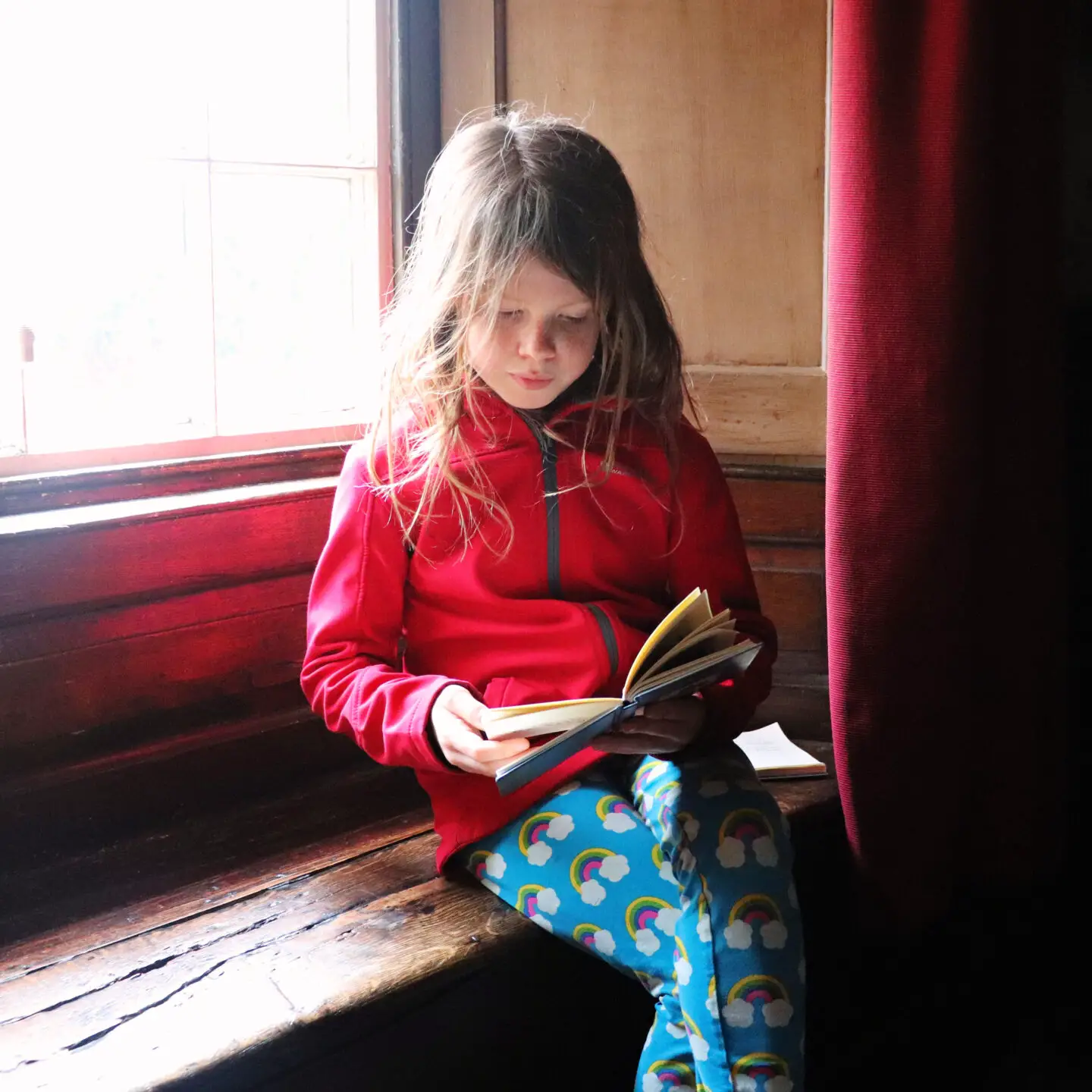
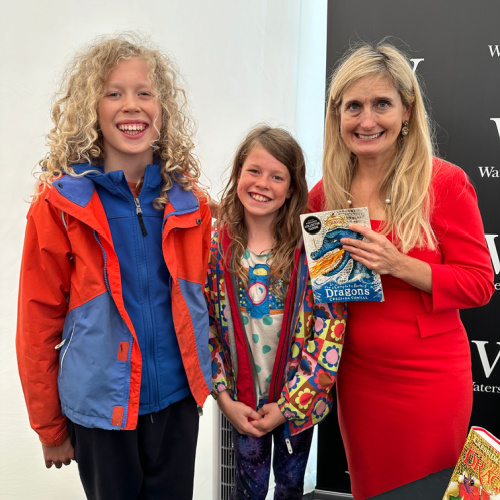
A love of stories and all kinds of books is an excellent starting point for English learning. Listening to others read aloud is the best foundation a child can have. Once they can read independently, access to a wide range of literature—including comics and poetry alongside books—keeps that enthusiasm growing.
Even audiobooks work perfectly well for developing a joy of stories and narrative.
Homeschool English
The Homeschool English website offers five live Zoom lessons every week covering reading, writing, and literary analysis. The content is aligned with the English national curriculum and taught by experienced, qualified teachers in small classes of no more than ten children.
If you’re looking to outsource English teaching, this is a great option to have everything in one place.
However, even if you’re not looking for online lessons, the site also offers some excellent free resources.
Free English Resources Aligned to the UK Curriculum
There are three separate free resources available: one for 11–13 year olds, one for 14–16 year olds, and one for 16–18 year olds.
Homeschool English Word Power – 11-13 Year Olds
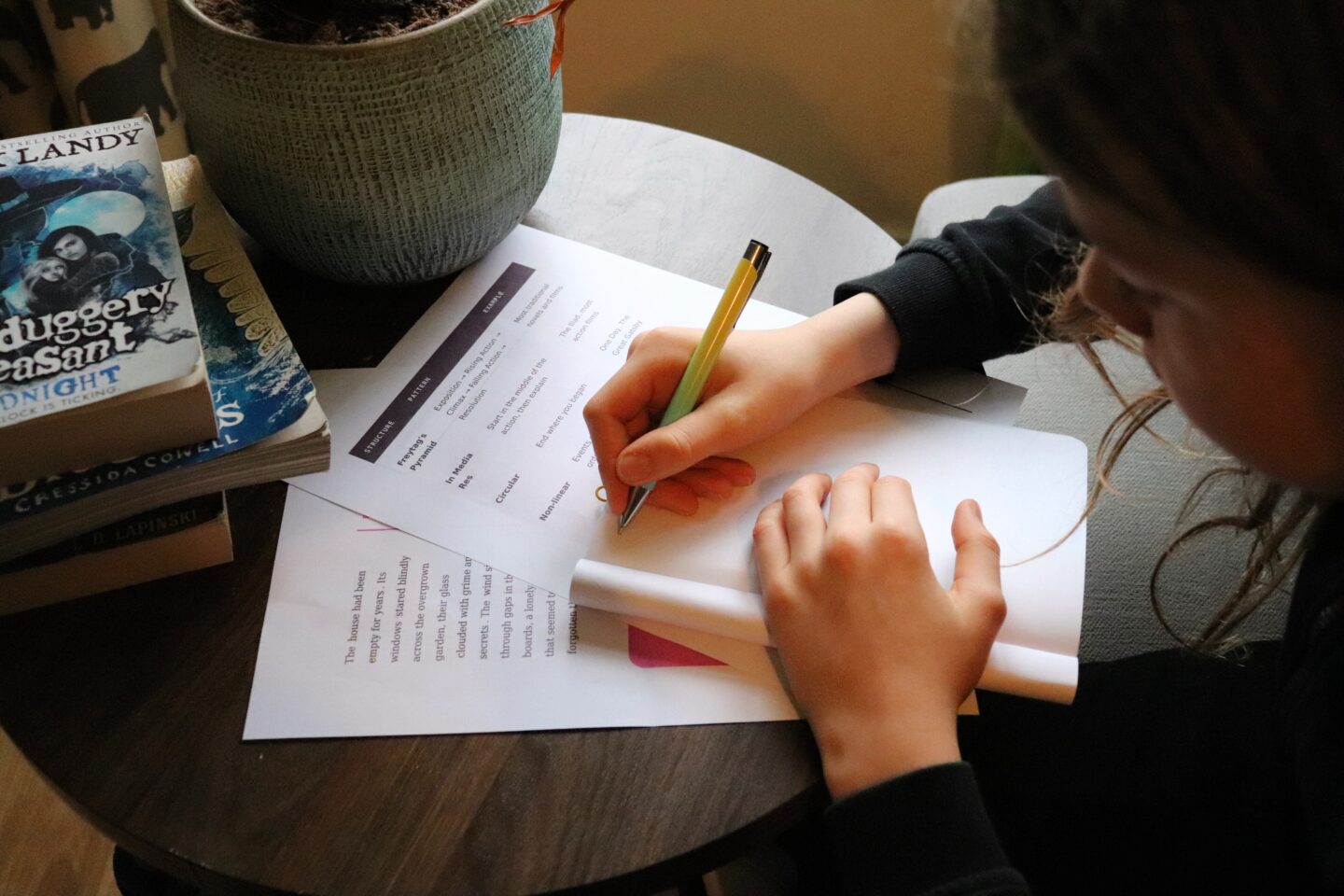
The first resource is aimed at the early secondary years, helping children understand the power of words and how to analyse them.
It’s a comprehensive guide to how stories, poetry, and drama are written, and how to analyse them. That might sound dry, but it’s actually an engaging resource that treats learning as an adventure with words. Presenting analysis as a detective kit makes the whole process interesting and fun.
Homeschool English Complete Companion – 14-16 Year Olds
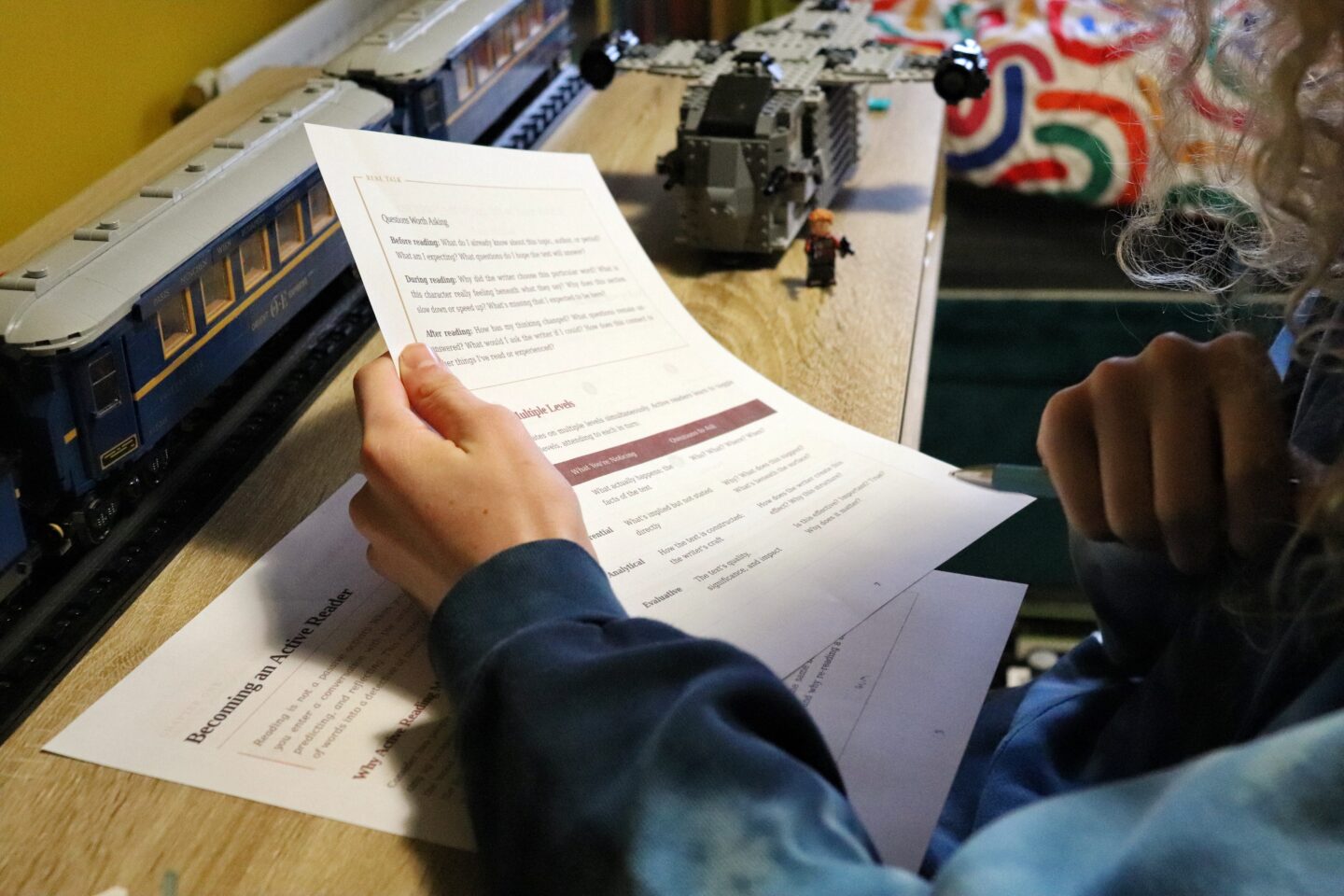
Aimed at older teens, this companion builds on the Word Power resource for 11–13 year olds. Even if your child is 14 or 15, I’d recommend starting with the earlier resource to give them a solid foundation first.
The writing in this companion is pitched for older children to read independently, which is a great way to develop their reading and analytical skills.
The Complete Companion deconstructs pieces of writing to help teenagers understand not just how a text is put together, but why the author made those choices. It covers prose, poetry, and even Shakespeare.
Home School English Sixth Form Companion – 16-18 Year Olds
The third resource is aimed at older teens, from 16 to 18. Like the Complete Companion, it’s designed for the student to read independently, building on principles learned from the earlier resources.
The Sixth Form Companion is particularly useful for those preparing for exams. It’s intended to support independent learning rather than serve as a complete course. It’s also designed to be revisited throughout the year, with new insights emerging on each reading.
Further Steps After Completing the Free Resources
The free resources from Homeschool English are designed to complement your child’s wider learning, offering helpful guidance on how to write and how to understand all kinds of writing in the world around them. These analytical skills transfer to other media too—being able to analyse stories leads to analysing adverts and social media claims. These are all crucial skills for children to develop in today’s world!
Home Ed Posts You Must Read

Free English Resources For Home Educators
