
I’ve mentioned many times on my Instagram channel how different my two boys are. This isn’t a recent thing, even as babies they were completely different characters. My youngest was fairly content and was happy to be carried everywhere in a wrap. My eldest on the other hand spent a lot of time upset and crying, we weren’t always sure exactly why, but tried a variety of things to help and make sure all his needs were met.

Babies do not cry to exercise their lungs or annoy you, they are genetically programmed to cry when they are distressed. Care, a UK healthcare brand, and Penny Lazell, a midwife and independent Health Visitor have teamed up to discuss the reasons why your baby might be crying and how to help them.
Table of Contents
Hunger
One of the most obvious reasons for an unhappy baby is that they’re hungry. Even if they have had a feed not too long ago, babies go through different developmental stages and may need to feed more frequently.
The solution is quite obvious here, try feeding your baby. If they are soothed by milk then that is probably the reason they were upset and will settle down.
Wet Or Dirty Nappy
My sense of smell is awful and I never knew that my babies had dirty nappies by that sense. Instead I would peek every so often to find out if they needed changing. Obviously if they are dirty or quite wet than that is most likely to be the reason that they are crying and changing them will stop the tears.
Penny Lazell mentions that young babies often open their bowels just after a feed, so if they are upset after a feed, check their nappy again. I remember that this often meant changing before a feed and then again afterward, annoying, but it does get easier!
Tiredness
We all know that tiredness makes us grumpy. It’s the same for our babies. Yawning, rubbing eyes and not engaging may mean that your baby is tired. The solution? Get your baby to sleep. Yes, I know it’s not as easy as it sounds, I used to walk for hours with my eldest to get him to sleep. Littlest has always fed to sleep, which is a lot easier for me, but I know that not everyone likes to do that.
Penny advises that when your baby is overtired and you are getting stressed that they won’t sleep it’s best to try a change of scenery. Getting outside in the fresh air definitely helped my two fall asleep.
Pain
I found cries of pain much harder to differentiate. For my eldest he often seemed to be in pain with teething, but it really wasn’t that obvious. Penny’s advice is to trust your instinct and check your baby’s temperature, but also check for tight clothing or anything that could be irritating them. If you aren’t sure seek medical advice.
Boredom
Babies crave attention, their brains are wired for learning and they need stimulation. I spent a lot more time with my eldest, singing and playing together. Perhaps this is because my youngest was happy to watch his sibling and got a lot of entertainment from the interaction between his brother and I.
Over Stimulation
Over stimulation is hard to identify. However if you think your baby is over stimulated, Penny recommends that you take the baby into a low lit room and stay still talking quietly to your little one.
Changes of scenery or reading a story in a quiet voice also worked well for us when the boys were over stimulated as babies.
Cuddles

I think everyone must realise now that cuddling babies is extremely important for their development. The days of when you were told that you are ‘spoiling your baby’ are hopefully over. Babies can’t be spoiled and they need frequent cuddles. If you have trouble getting other things done when your baby wants to be cuddled, invest in a carrier of some sort. They were invaluable to me with my second child.
Too Hot Or Too Cold
Babies can’t regulate their temperature as easily as adults, so Penny recommends you help them if they seem too hot. If they seem too hot take off a layer at a time until they seem happy again.
Transient Lactase Deficiency
Babies have an immature digestive system that can sometimes struggle to make enough lactase to digest the lactose found in both breast and formula milk. This can lead to colic symptoms and is called Transient Lactase Deficiency.
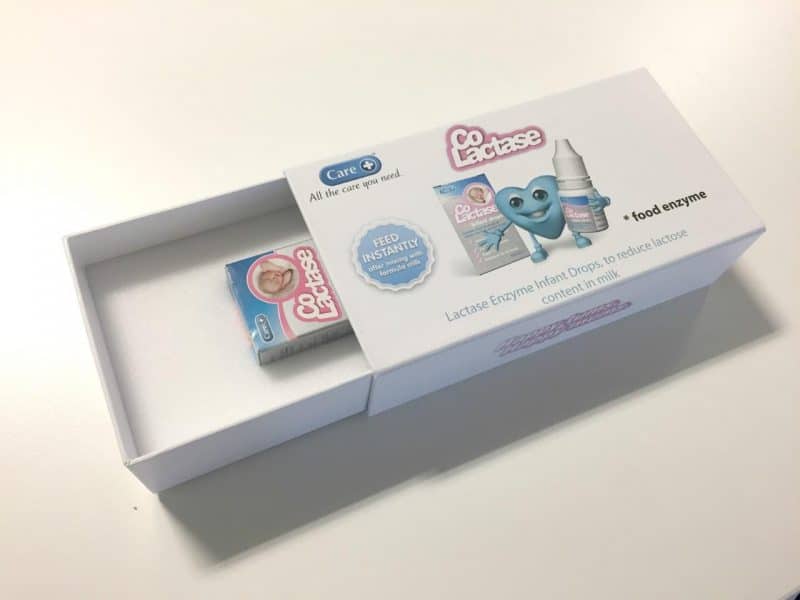
A one week trial of a Lactase Enzyme Drop is recommended by both the National Institute of Clinical Excellence (NICE) and NHS Choices for any baby that appears to have infant colic. This could reduce the colic symptoms without having to move to or change formula. Care Co-Lactase Infant Drops are available at Asda and may well be the answer to those colicky symptoms.

* This is a collaborative post with Care.
Leave a Reply