There’s a part of blogging nobody warns you about. The days out are the easy bit: the muddy walks, the picnic eaten in a car park because the heavens opened, the craft table covered in glitter that’s still turning up in the washing weeks later. It’s the evening afterwards that catches up with you, when the children are in bed and you sit down to sort a few hundred photos and write it all up while your back quietly files a complaint.
For years my “office” was the corner of the sofa, then the kitchen table, then a wobbly desk in the spare room with a chair that came with the house. I put up with it because that’s what you do. You tell yourself it’s only an hour. Then it’s three hours, and by the end of the week you’ve got a stiff neck and a sulky lower back.
Table of Contents
What actually made the difference
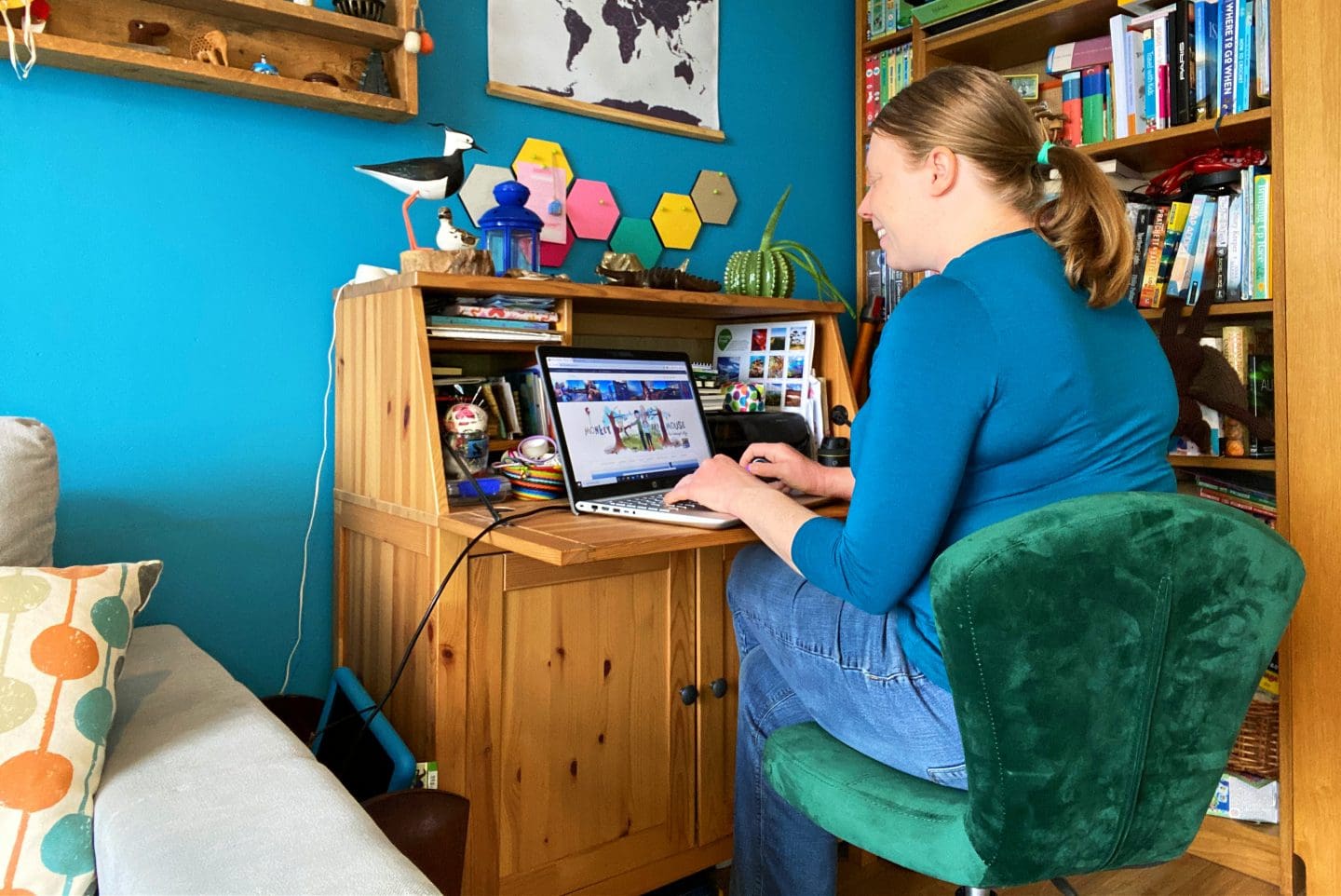
The moment I changed my mind was oddly simple. I noticed I felt more tired after sitting down to write than I did after a whole day of walking. That seemed daft, so I started looking at the chair. If you spend long stretches at a screen, ergonomic office chairs are worth a proper look, because they let you adjust the seat height, the back support and the armrests so the chair fits you rather than the other way round.
Here’s what I’d check if you’re choosing one:
- A seat height that lets your feet rest flat on the floor with your knees at roughly a right angle
- Lumbar support that fills the curve of your lower back
- Armrests you can move so your shoulders don’t creep up towards your ears
- A seat depth that suits your legs, especially if you’re on the shorter side
- A breathable back if you tend to get warm when you’re concentrating
Within a couple of weeks I’d stopped wriggling about and tucking my feet underneath me. I was getting posts finished in one sitting, which, if you’ve ever seen my drafts folder, is nothing short of a miracle.
Don’t forget the spare seats
Most of us have more than one place to sit and work. There’s the armchair where I answer emails with a laptop balanced on a cushion, the stool that migrates between the craft table and the desk, and the dining chair that gets dragged in whenever one of the boys wants to “help”. If you’re adding to your set-up, a couple of extra office chairs for the spare room or a shared workspace can be a sensible move, as long as you hold them to the same checklist: adjustable, supportive and sturdy enough to survive a child spinning on it at full speed.
You don’t need to spend what you’d spend on your main seat. But a chair nobody can sit on for more than ten minutes isn’t much use to anyone, so it’s worth getting it right.
Getting the screen sorted
Once the seat was right, the next culprit was my laptop. Looking down at a screen for hours is one of the quickest routes to neck ache, and I’d been doing it for years. A cheap laptop stand and a separate keyboard and mouse fixed it almost overnight. The top of the screen should sit roughly at eye level, about an arm’s length away, so you’re looking straight ahead rather than down at your lap.
Light helps too. I’m lucky enough to have a window beside the desk, and I try to angle the screen so the glare isn’t bouncing straight back at me. On dark afternoons a desk lamp does the job, and it’s much kinder to your eyes than squinting at the screen in the gloom.
Making it work in a small space
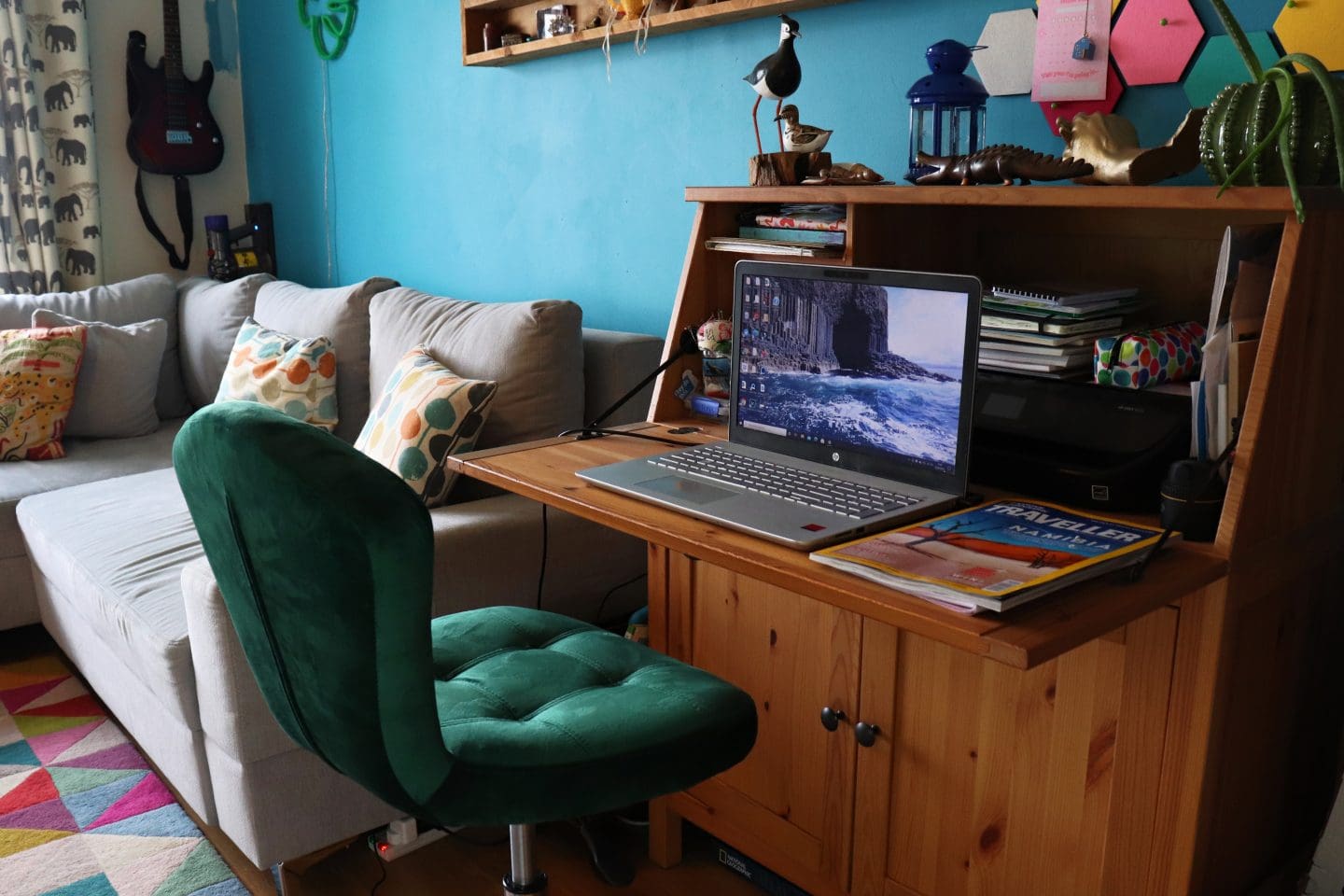
You don’t need a dedicated room for any of this. A corner of a bedroom, the end of a landing or a nook under the stairs can all work if you treat it as a proper workspace rather than somewhere you happen to open a laptop. A bookcase makes a surprisingly good divider, and a rug under the desk marks out the area so it feels like somewhere you go to work, not just somewhere you sit.
If budget is tight, second-hand is a good shout. Just test the levers before you buy. Make sure the height adjustment actually holds, the back tilts without a fight and nothing wobbles when you lean. A bargain that doesn’t adjust isn’t a bargain.
Little habits that help
A good set-up only goes so far, so I’ve picked up a few habits too:
- I set a timer and get up every hour, even if it’s just to put the kettle on
- I keep the things I use daily within easy reach so I’m not twisting round for them
- I clear the desk at the end of each session so I’m not greeted by yesterday’s chaos
- I stretch my shoulders and wrists before I start, which takes about a minute
None of this is glamorous, and it won’t make for the prettiest photos on your Instagram feed. But it has made the sit-down part of blogging far more pleasant, which leaves me more energy for the bit I love: getting outside with the family and finding somewhere new to explore.
If you’ve got a sore back and a laptop that’s seen better days, it might be worth looking at your workspace before you blame the long walks. Mine was the culprit all along.