‘Do you see the gap between the land and that sea stack over there? Legend has it that Cú Chulainn jumped that gap when running from the sea witch Mal. She missed and fell into the rocks and sea below, this is how Loophead got its Gaelic name. Headland of the leap.’ Says our guide at the top of the Loophead lighthouse. This is one of the many Irish legends you will learn in the area! And it’s fantastic to listen to the stories being told whilst you are looking out across the headland from the top of a lighthouse. I imagine it would be even more mystical if the sea mist rolled in.
But Loophead lighthouse is more than just legends, it has a history all of it’s own.
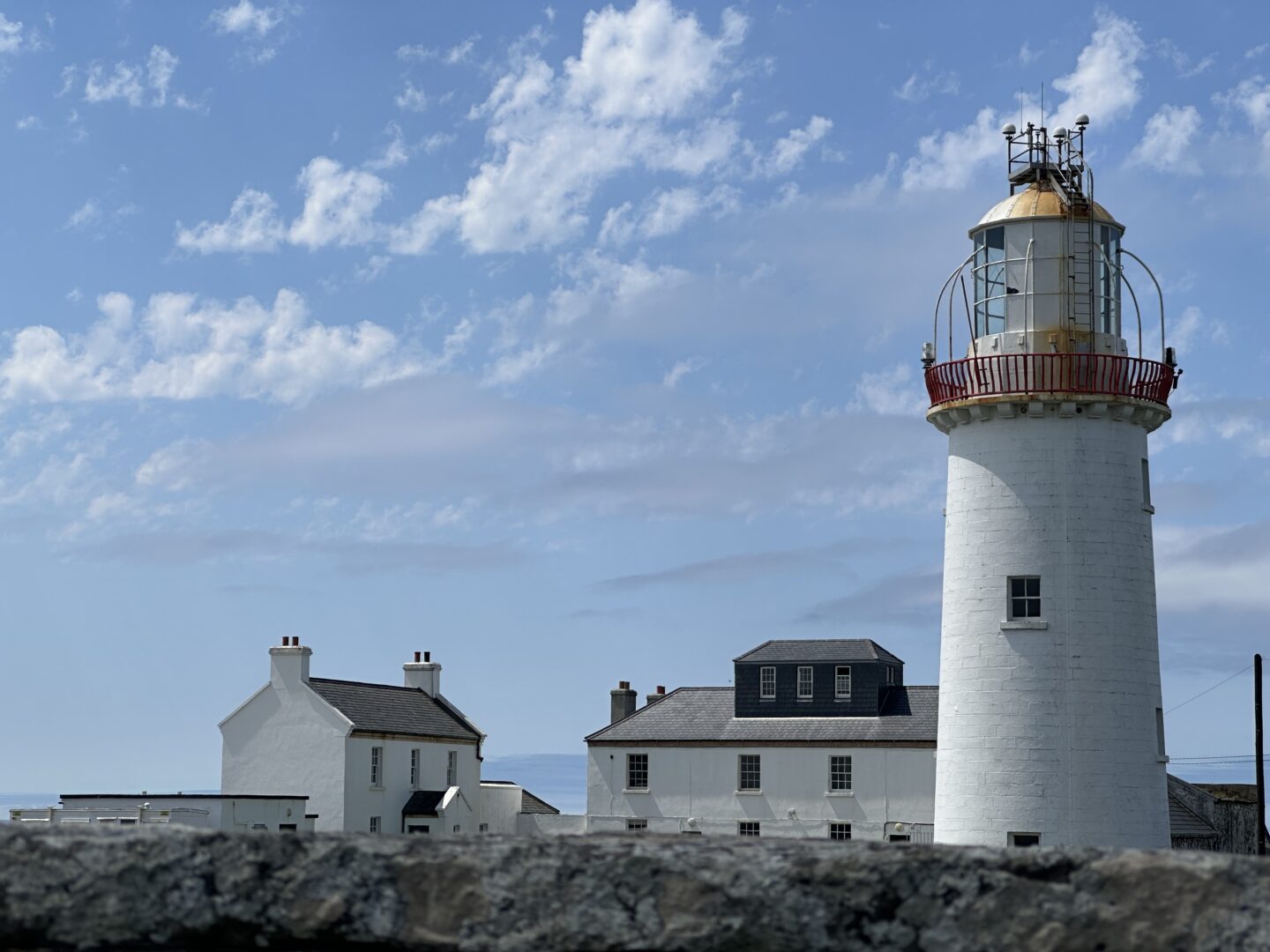
Table of Contents
Where is Loophead Lighthouse
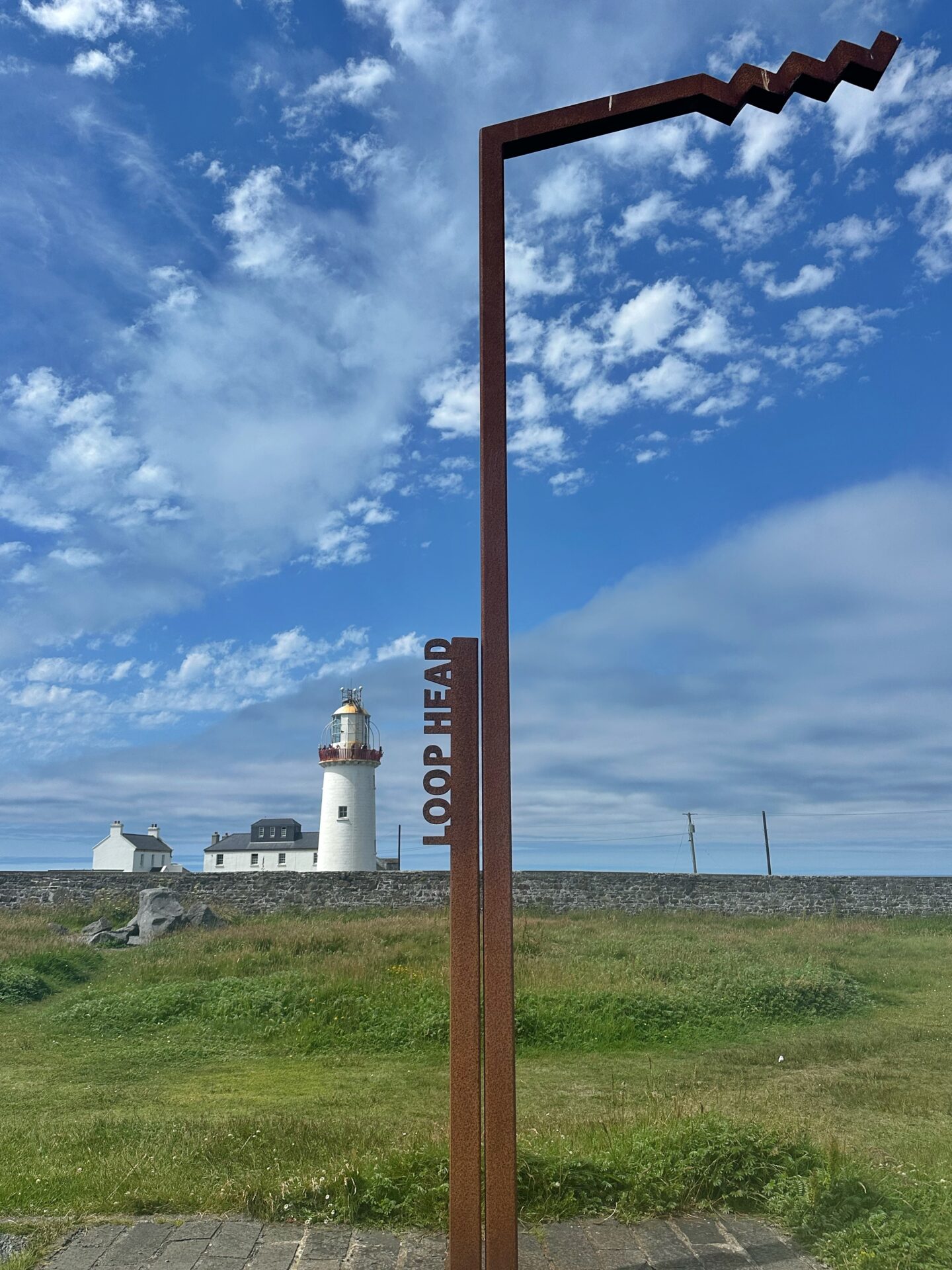
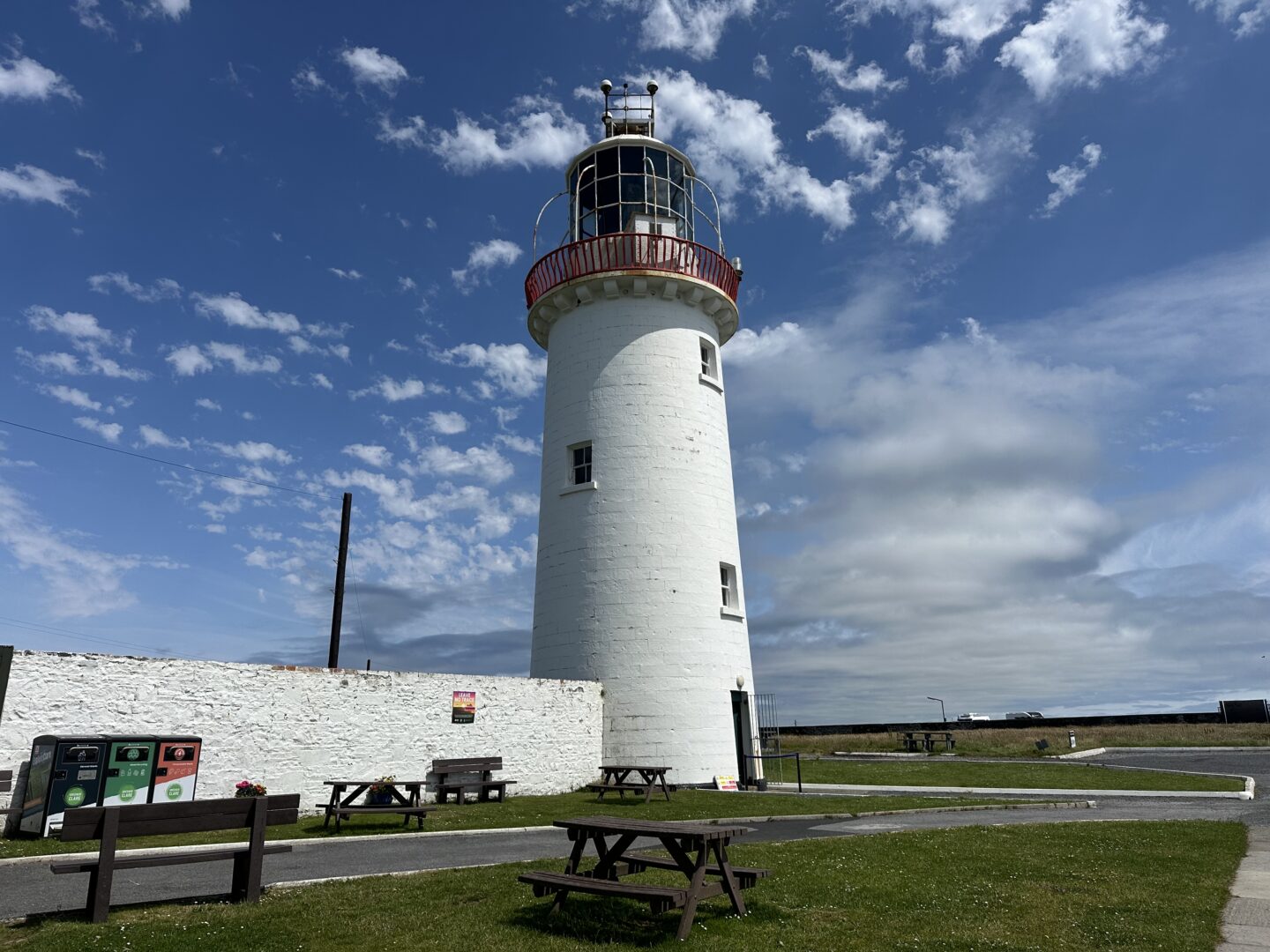
Loophead Lighthouse is on the Wild Atlantic Way, as can be seen by the WAW sign in the photo below. It’s right at the end of Loophead peninsula beside the Shannon estuary, South of Kilkee in County Clare.
It seems remote and out of the way when you are there, but if you spend the day in the area you’ll find out why it’s such a wonderful location. Access is by small roads from the N67 between Kilkee and Kilrush. Driving is the easiest option, but there are also buses to Kilkee and Kilrush where can book a taxi to Loophead.
History of Loophead Lighthouse
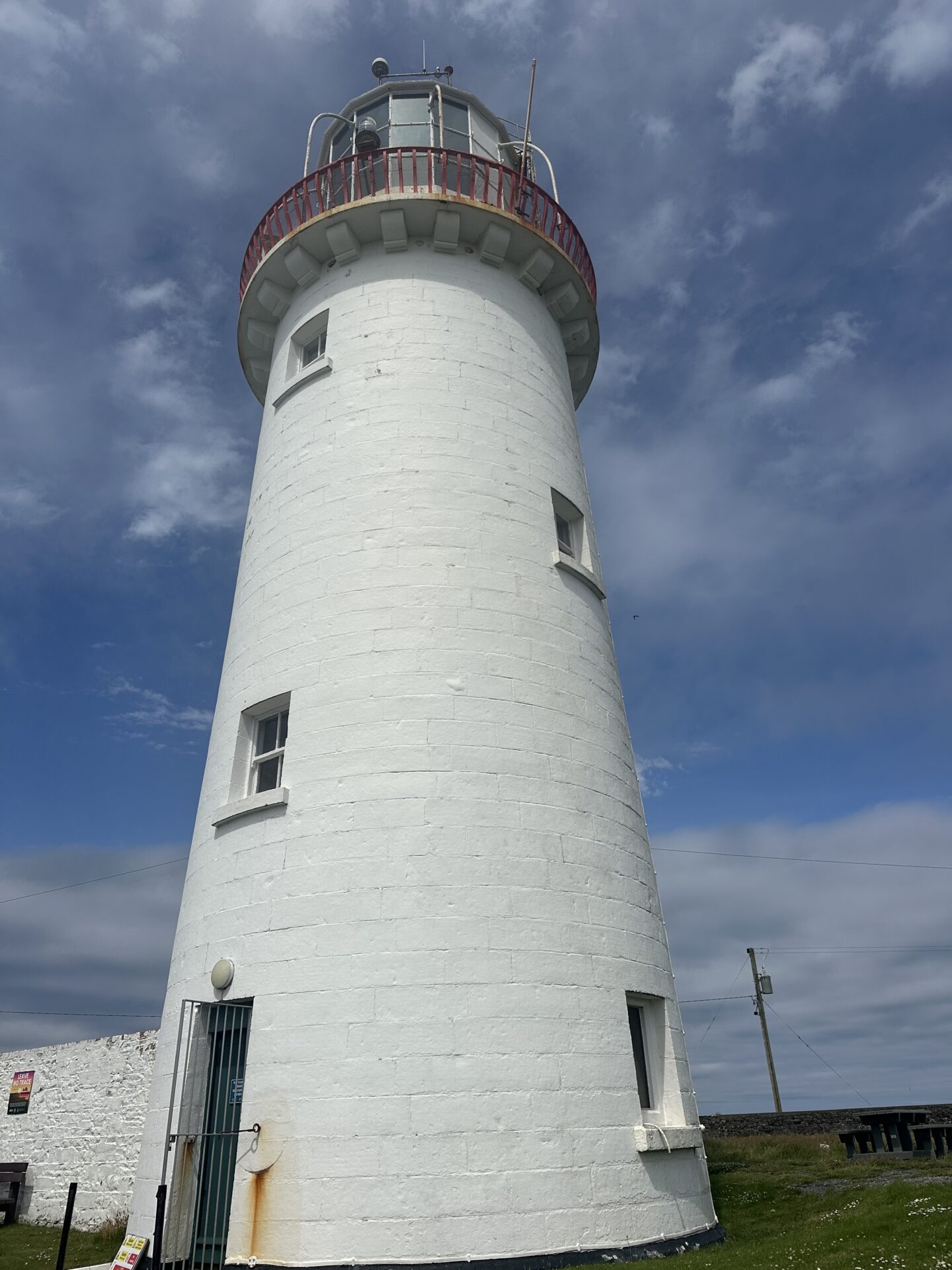
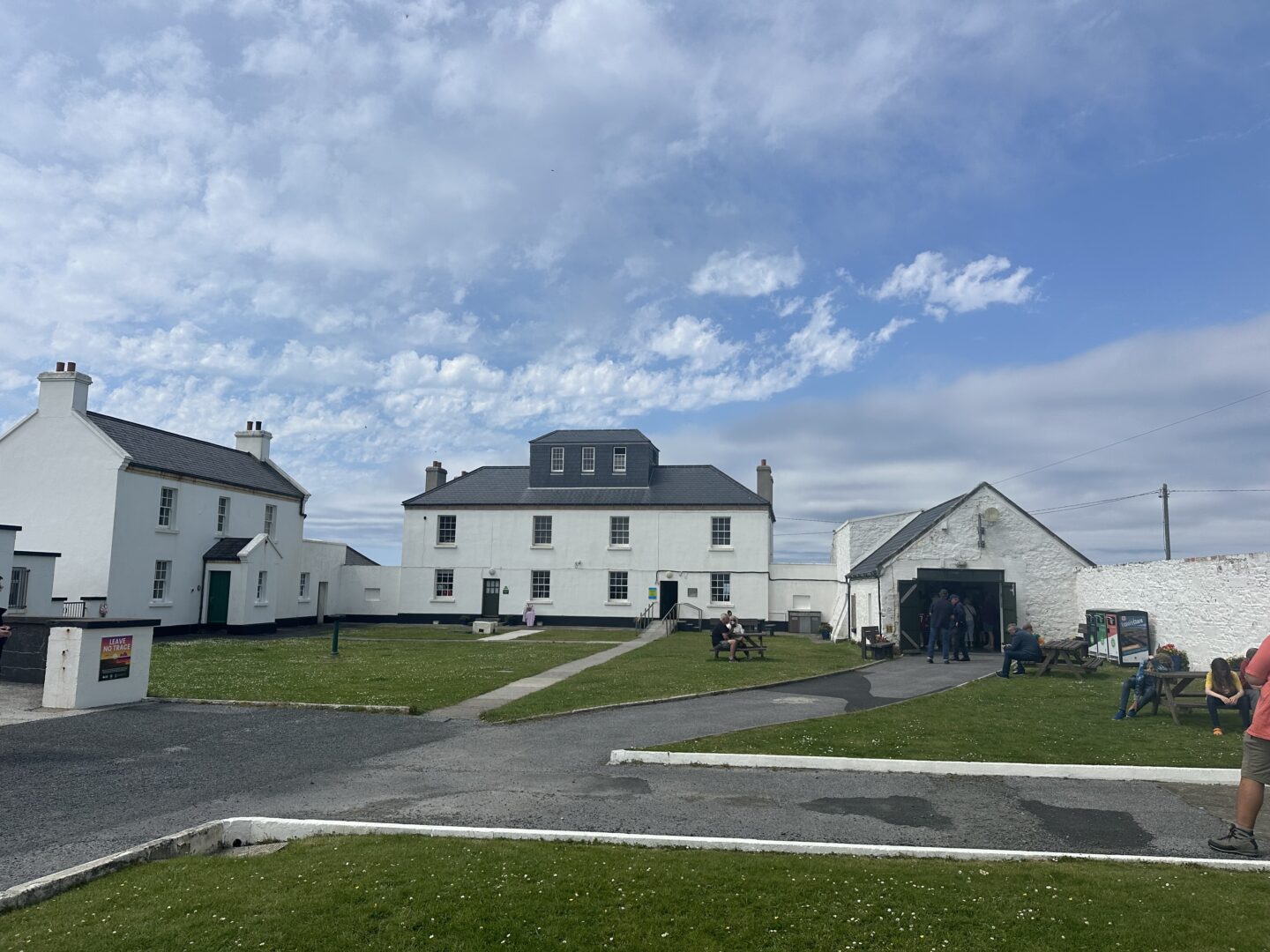
Loophead lighthouse, as you can see it today was built in 1854, however the lighthouse history at this spot stretches back as far as 1670. In the late 1600’s Loophead lighthouse consisted of a small stone built cottage with vaulted roof. The family lived in the cottage and the light, consisting of a coal-burning brazier, was on top of the roof accessed by an internal staircase. Part of the old cottage is still within the current lighthouse grounds.
The first lighthouse tower was constructed in 1802, befor being replaced by the current lighthouse in 1854. In 1869 the lighthouse light changed from a static light to a flashing light. Each lighthouse has a different flashing pattern, called its character. This is so people at sea knew which area of land they were near by the lighthouse character. Loophead has a white light that flashes four times every 20 seconds. In 1991 the lighthouse was automated and no longer required a lighthouse keeper.
What Can You do at Loophead Lighthouse
The Lighthouse Tour
Book your lighthouse tour before you arrive, there are limited spaces to climb the tower. So during the summer it’s best to book ahead. The tour is guided by a knowledgable tour guide who can answer almost any question you throw at them. I was impressed with our guides knowledge of not just the lighthouse history, but of the legends, myths and geographical knowledge.
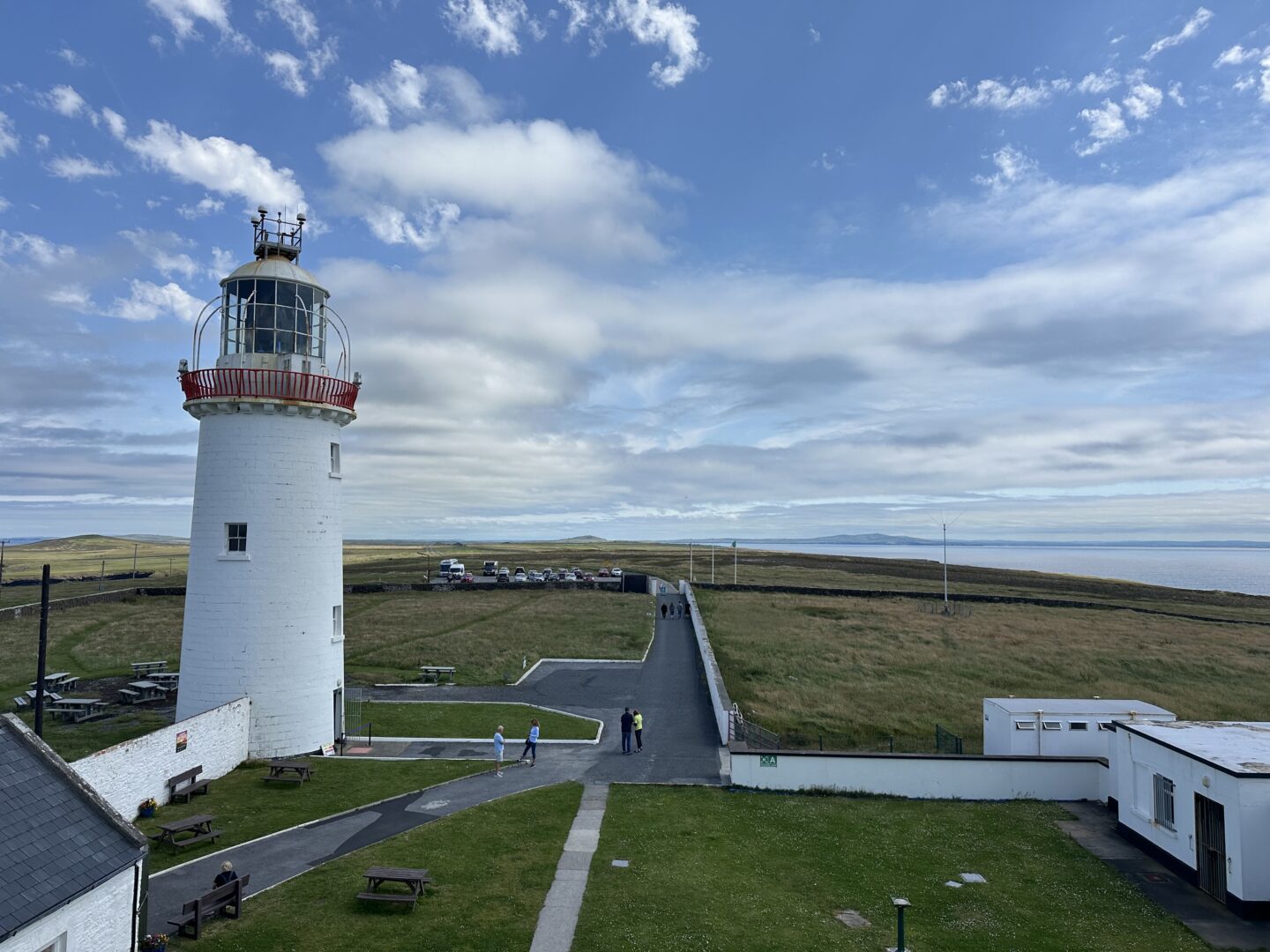
There are spiral stairs leading to the balcony at the top, where you can get a fantastic view across to the nearby cliffs, but also across the Shannon estuary and as far as Dingle in Kerry.
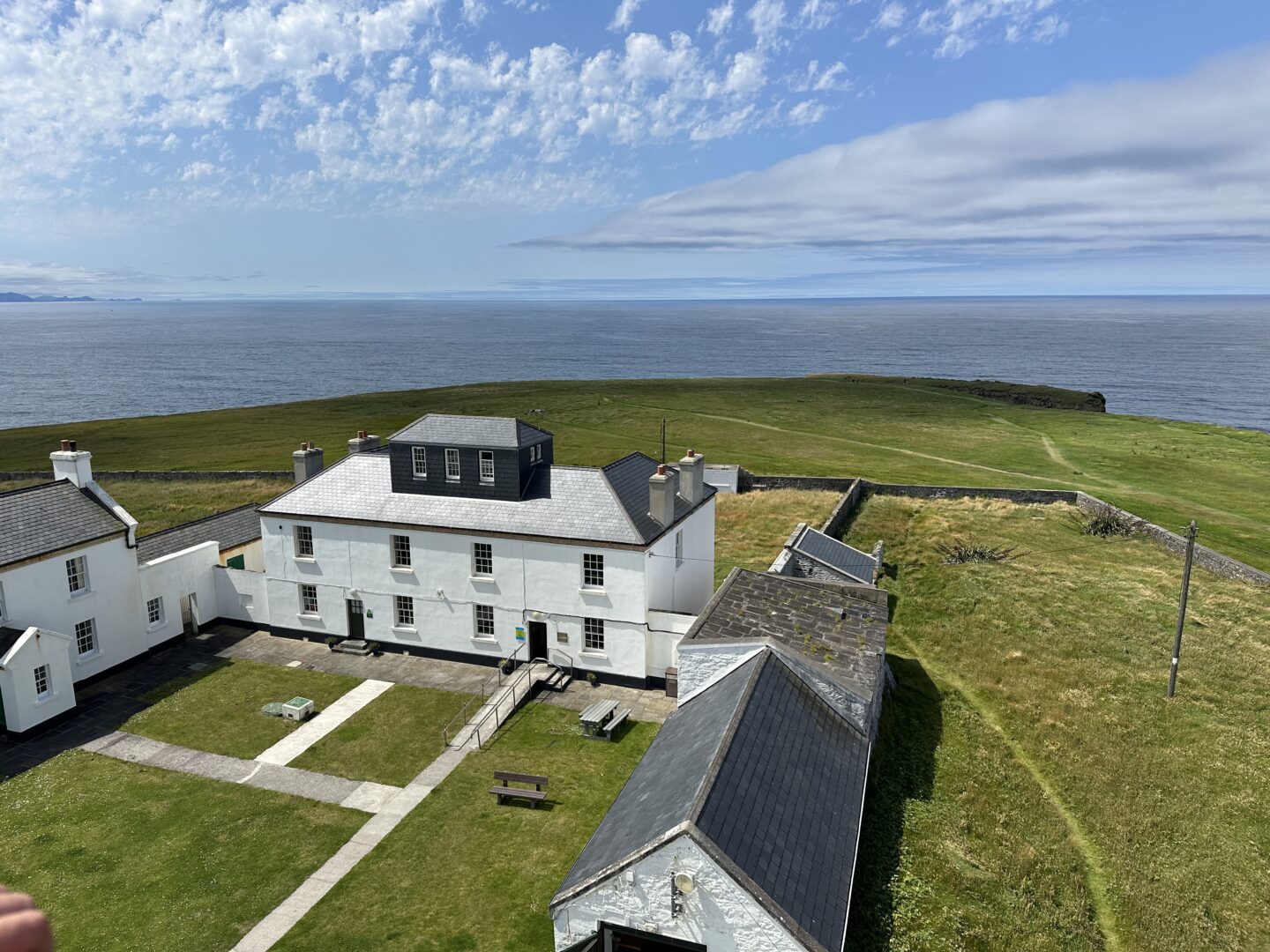
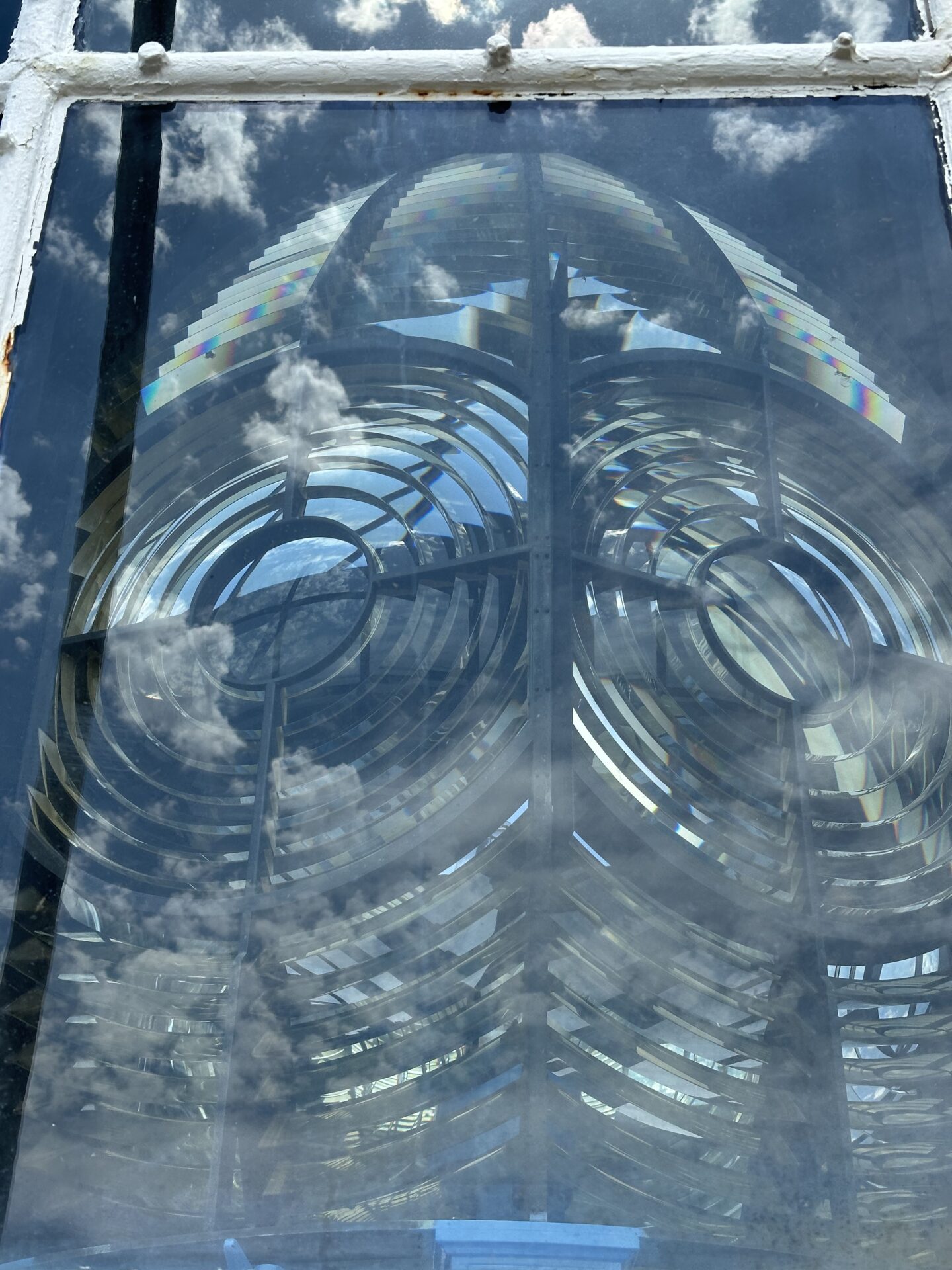
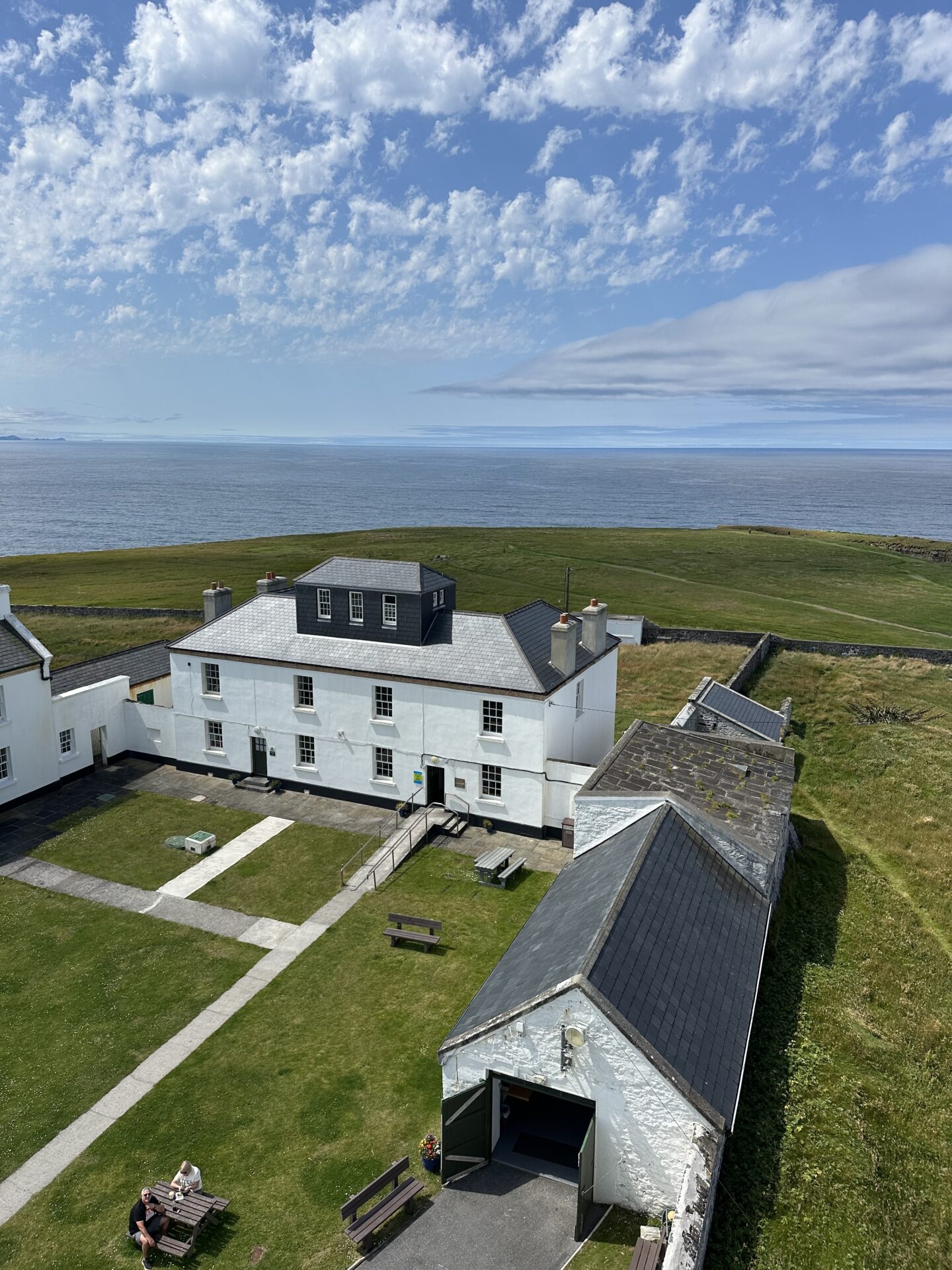
You can also see the light up close, it’s interesting to see how it works and I do love the shape of the lenses too! From here you can also look down at the lighthouse buildings and see the flat roofed building that was the first lighthouse building on the site.
Lighthouse Museum
Across the courtyard from the lighthouse is a museum, inside one of the lighthouse buildings. Here you can learn about the history of some of the families who once lived in Loophead lighthouse. It seems like the more recent children really enjoyed growing up in the grounds of the lighthouse, there’s certainly plenty of space to play!
If you head upstairs in the museum you’ll find a viewing area, complete with binoculars and plenty of marine wildlife ID posters. Have a good look through the windows and look out to sea! It’s also just a great vantage point to admire the lighthouse.
Eire 45 Sign
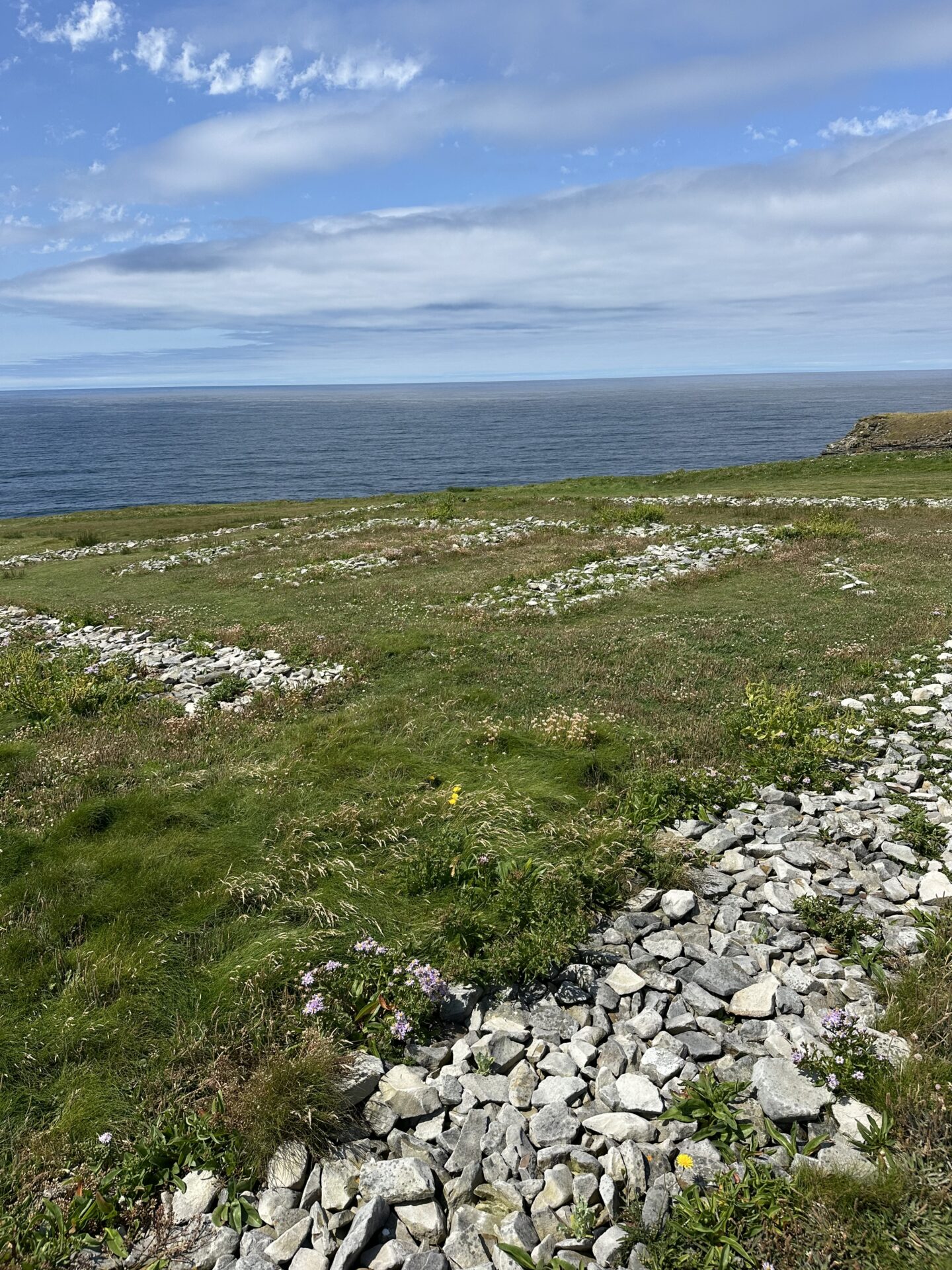
Don’t forget to take a walk down to the Eire 45 sign at the end of the peninsula. This was constructed on the peninsula from whitewashed rocks in 1943. There were 85 Eire signs around Ireland, all with their own unique number. These signs were to help USA pilots know which land was Ireland and as Ireland was neutral in the war, the pilots couldn’t land there. Irish authorities told the American government that any active military planes landing in Ireland would be impounded and pilots interned. The American authorities asked for the signs to be placed with a number so the pilots knew where in Ireland they were passing over. It seems that many pilots were inexperienced and with no GPS or radar it was easy to get lost. This system of numbers helped pilots know where they were and which direction they should head.
The Loophead Eire sign was excavated and restored in 2011, previously covered with grass after world war 2, but still there!
Shop
Lastly, visit the shop for a souvenir from Loophead! They also have some refreshments available in the shop, mostly snacks and drinks. With picnic benches outside the shop, it’s a nice spot for a hot drink and rest.
Other Irish Posts You May Enjoy
Pin Loophead Lighthouse Review