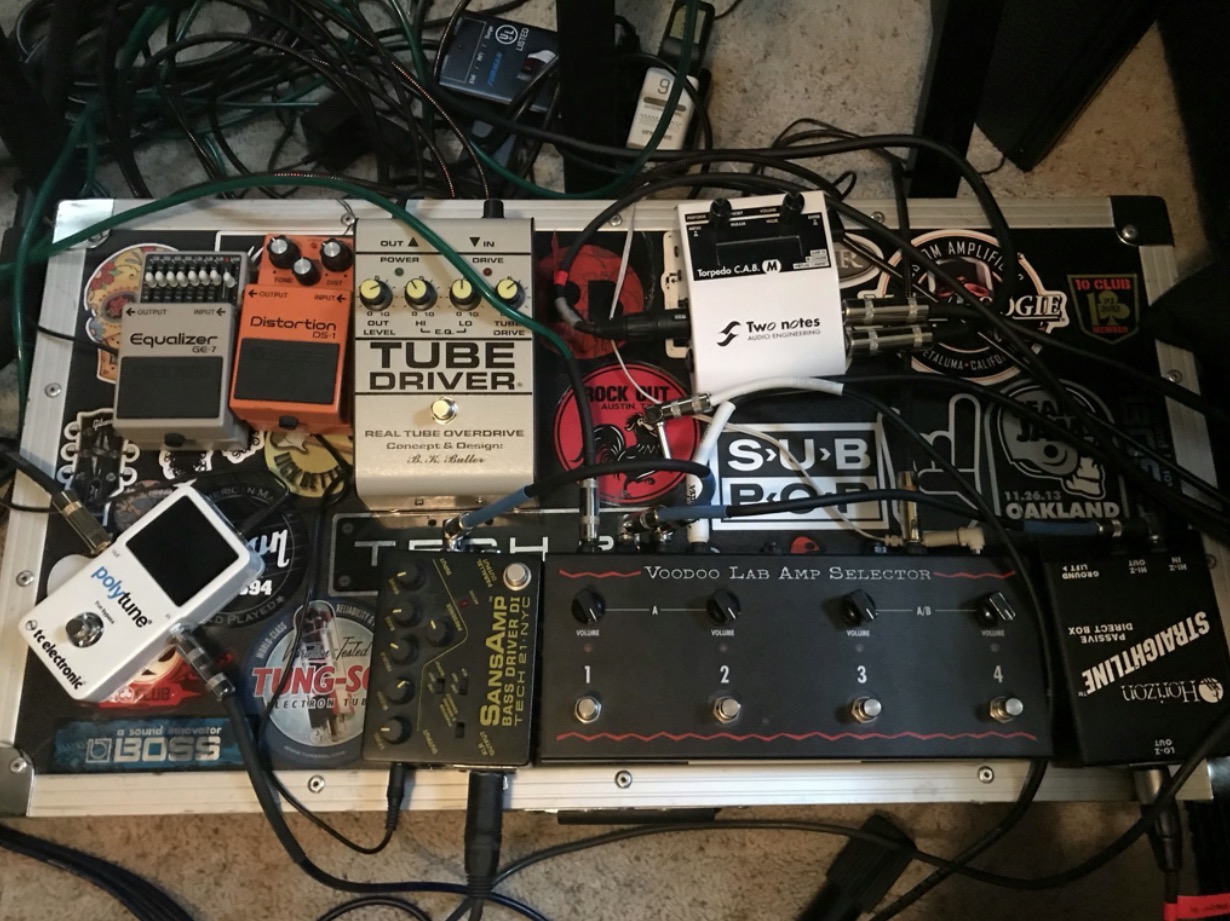
Effects pedals were born out of the culture of electric guitar, particularly in response to the unique sound requirements of amplified string instruments and players’ desire to achieve effects impossible with clean amplification alone. What has emerged in recent years is that these tools can be applied to other instruments, with results that are at times useful and at other times transformative. The wah pedal, for example, has effects that can be used on acoustic guitars, banjos, and other stringed instruments, distinct from its use on electric guitar.
Table of Contents
What Pedals Actually Do to a Signal
To understand why effects pedals work on different instruments, it’s necessary to understand what they do. The majority of pedals alter the electrical signal that passes through them, changing its frequency, characteristics, dynamics, or timing, or a combination of these. The pedal is unaware of the signal’s source. It reacts to the electrical signal, not the source.
It is this instrument-neutrality that allows translation. Any instrument that generates an electrical signal (using a pickup or microphone) provides the pedal with the raw material it needs to work on, regardless of whether that material came from a Stratocaster, a resonator guitar, or a tenor banjo.
Pedals on Non-Guitar Instruments
Effects pedals modify a signal in response to a musician’s action, such as footswitches and expression rockers. On the electric guitar, this translates into the textures and colours of almost all genres of music. From the sustained warmth of overdrive to the swirl of modulation. The same effects on the banjo interact with the instrument’s percussive attack, producing a different feel from the guitar.
When effects pedals are applied to acoustic instruments they pickup sound differently, depending on the instrument’s timbre. It’s the same, but it sounds different. Musicians who experiment with pedals on instruments other than the guitar find that their expectations of how an effect will sound are not sufficient to explain the experience, which is both familiar and unfamiliar.
Reverb and Spatial Illusion
Reverb pedals simulate acoustic environments, from small rooms to large halls, around a dry signal. This effect is particularly consistent across instruments because spatial perception is invariant to the sound source’s position.
A banjo with reverb is played in an acoustic environment that it would never normally inhabit. A classical guitar with a cathedral reverb effect has a quality that cannot be achieved in any physical space. These translations are not attempts to make one instrument sound like another. They are extensions of the instruments’ expressivity.
Compression Across Instruments
The use of a compression pedal regulates dynamic range, compressing the difference between soft and loud passages. Compression on an electric guitar gives plucked notes sustain and smoothness. On acoustic instruments, the same effect reduces dynamic contrast, impacting the instrument’s mix in recordings or amplified performances.
Acoustic players who use fingerstyle techniques often find compression more helpful than they anticipated from its association with electric guitar. This effect helps overcome problems posed by acoustic amplification by taming the dynamic range that allows acoustic instruments to be expressive when played unamplified. However it is hard to manage consistently in amplified settings.
The Creative Case for Cross-Instrument Experimentation
Musicians will get the best results when applying pedals to non-traditional instruments. Or in non-traditional ways, without expecting what the result should sound like. Attempting to emulate electric guitar effects on a banjo may not sound like much. Allowing the combination to speak for itself can help create new sounds. This approach involves suspending judgment about how pedals are typically used on traditional instruments and being attentive to the outcomes of using familiar tools on unfamiliar instruments.